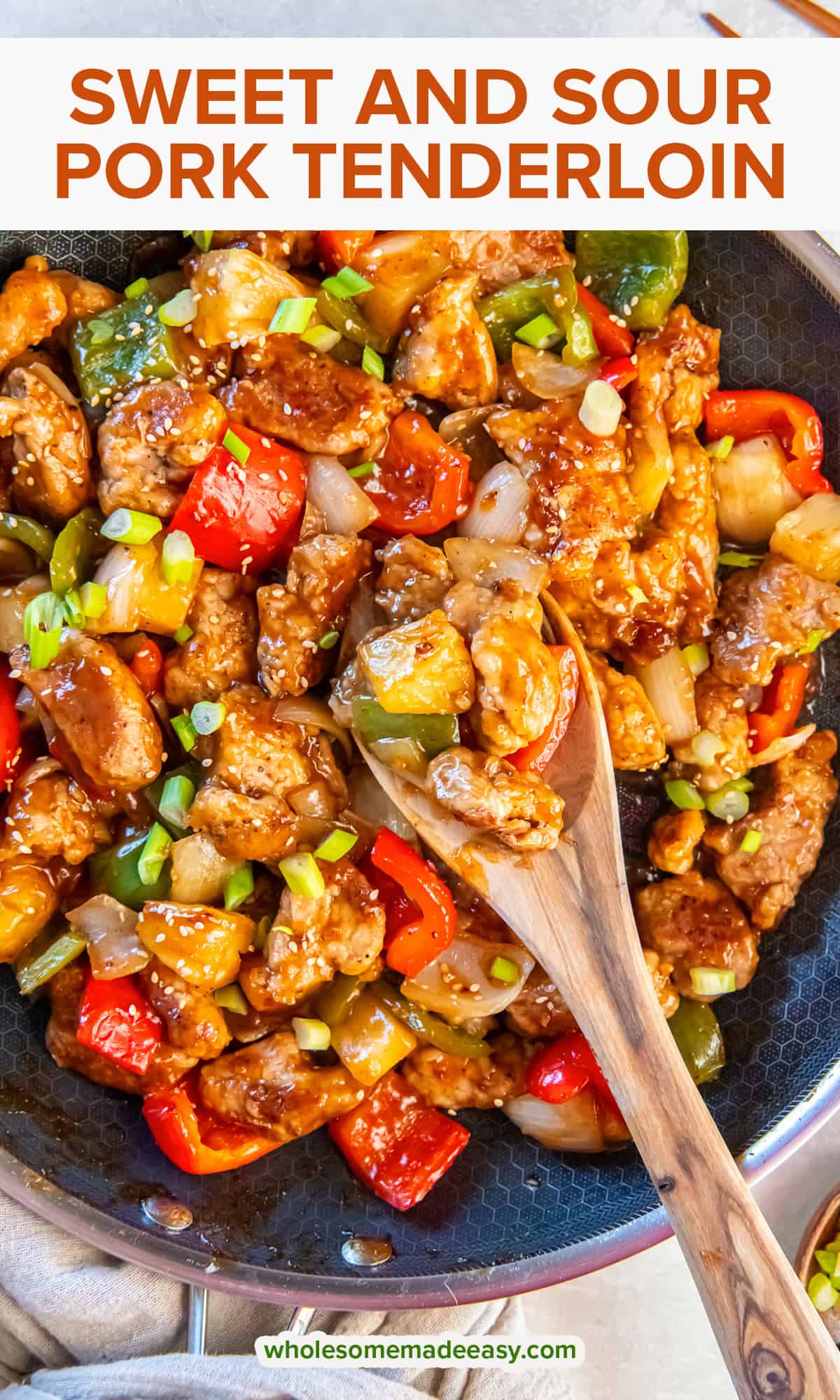
This Sweet and Sour Pork Tenderloin has the tangy, savory-sweet flavor, colorful vegetables, and pineapple you expect from the classic takeout version, but with far less fat and calories. This healthier version uses lean pork tenderloin and a simple stovetop method, for a super satisfying dinner that’s ready in about 30 minutes.
If you love these flavors, be sure to check out my Sweet and Sour Pork Kabobs, an easy summer grilling option.
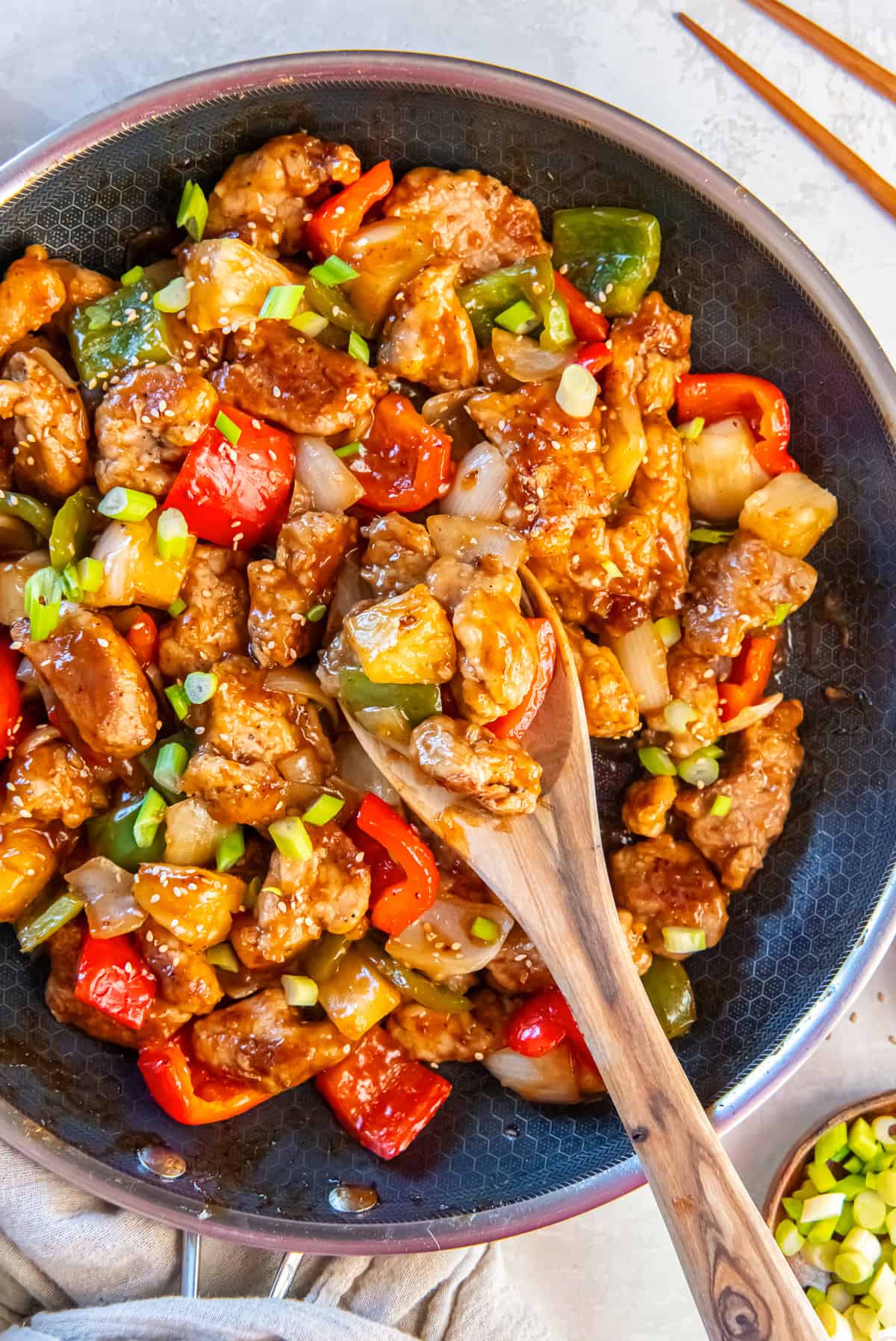
With over 30 grams of protein per serving and under 400 calories, this lighter sweet and sour pork is a super satisfying option for a balanced dinner. The easy method creates perfectly tender chunks of pork with lightly crisped edges, and the sauce has all that great sweet-tanginess you crave.
Serve it over brown rice or caulilfower rice for deliciously wholesome meal.
Table of contents
Recipe Highlights
- Made with lean pork tenderloin for a lighter take on sweet and sour pork.
- Great texture without deep frying.
- Tangy sauce with vibrant pineapple, bell peppers, and onion.
- Cooks in one skillet for easy cleanup.
- Ready in about 30 minutes, start to finish.
- Far lower in sodium, saturated fat, and calories than traditional sweet and sour pork.
Ingredients
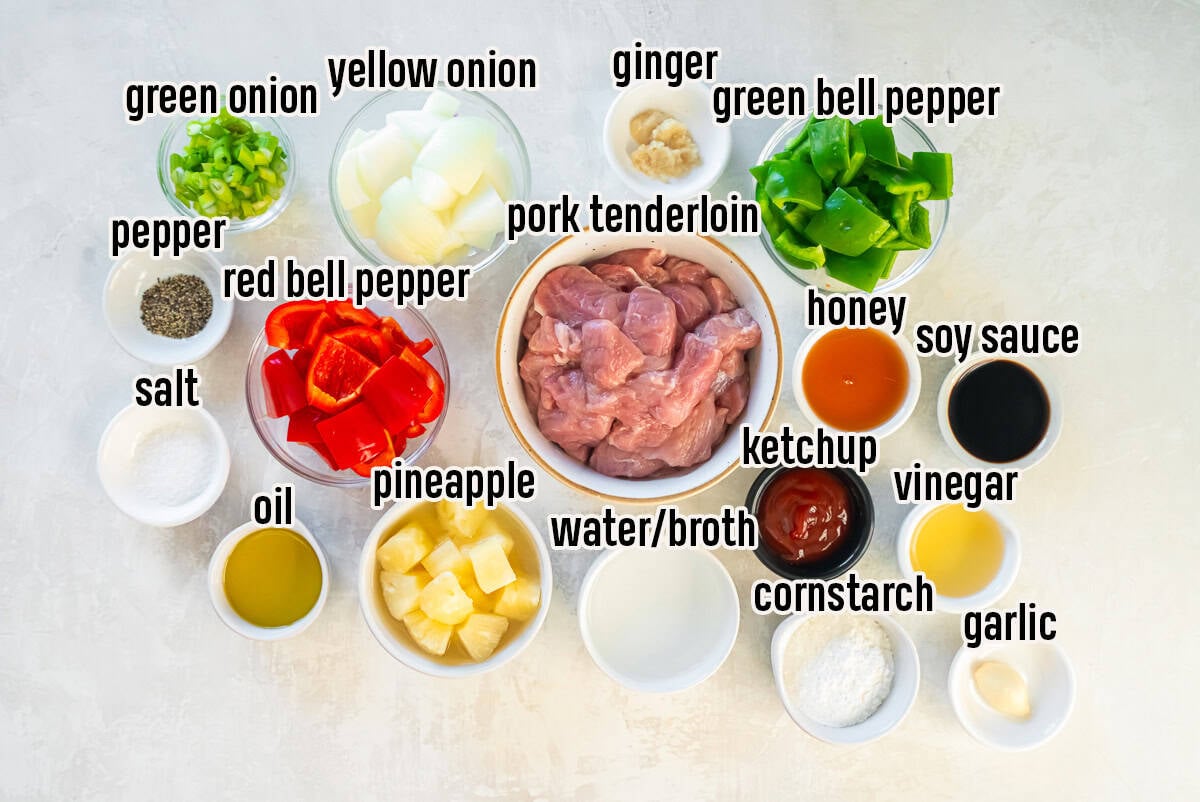
- Pork tenderloin: Cut into evenly sized ¾-inch chunks so the pork cooks quickly and stays tender.
- Cornstarch: Lightly coats the pork, creating a thin, delicate crust as it browns. This helps the exterior turn lightly golden and allows the sauce to cling to the pork.
- Bell peppers: Use both red and green for color and balance. Cut into large pieces so they stay crisp-tender.
- Ginger and garlic: To add depth of flavor to the sauce. I often use ginger paste as a quick substitute that works especially well in sauces like this.
- Pineapple: Canned pineapple chunks in 100% juice work perfectly here. Be sure to reserve the juice for the sauce.
- Broth: Using some broth or water keeps the sauce flavorful without being overly sweet.
- Honey: Adds gentle sweetness. Start with the lower amount and adjust to taste.
- Rice vinegar or apple cider vinegar: Rice vinegar is slightly milder, but both work well.
- Low-sodium soy sauce: Help you keeps the sauce balanced and not overly salty.
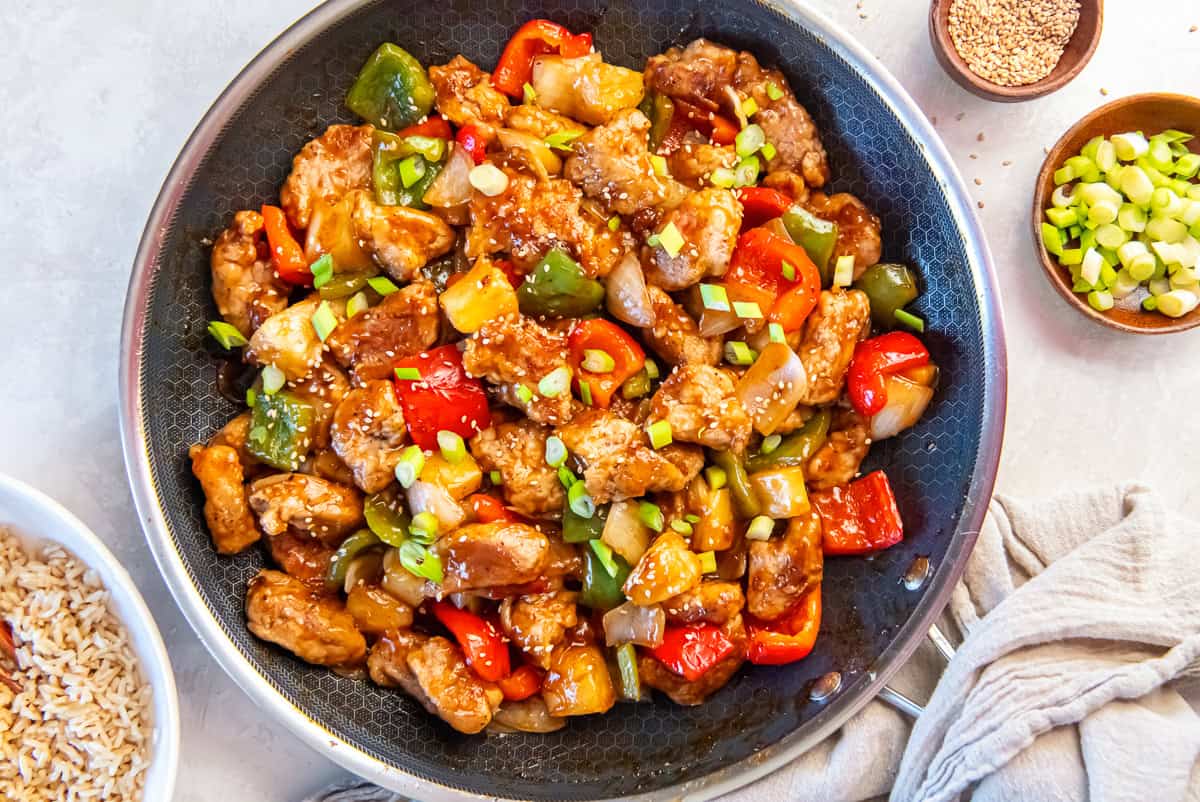
How to Make Sweet and Sour Pork Tenderloin
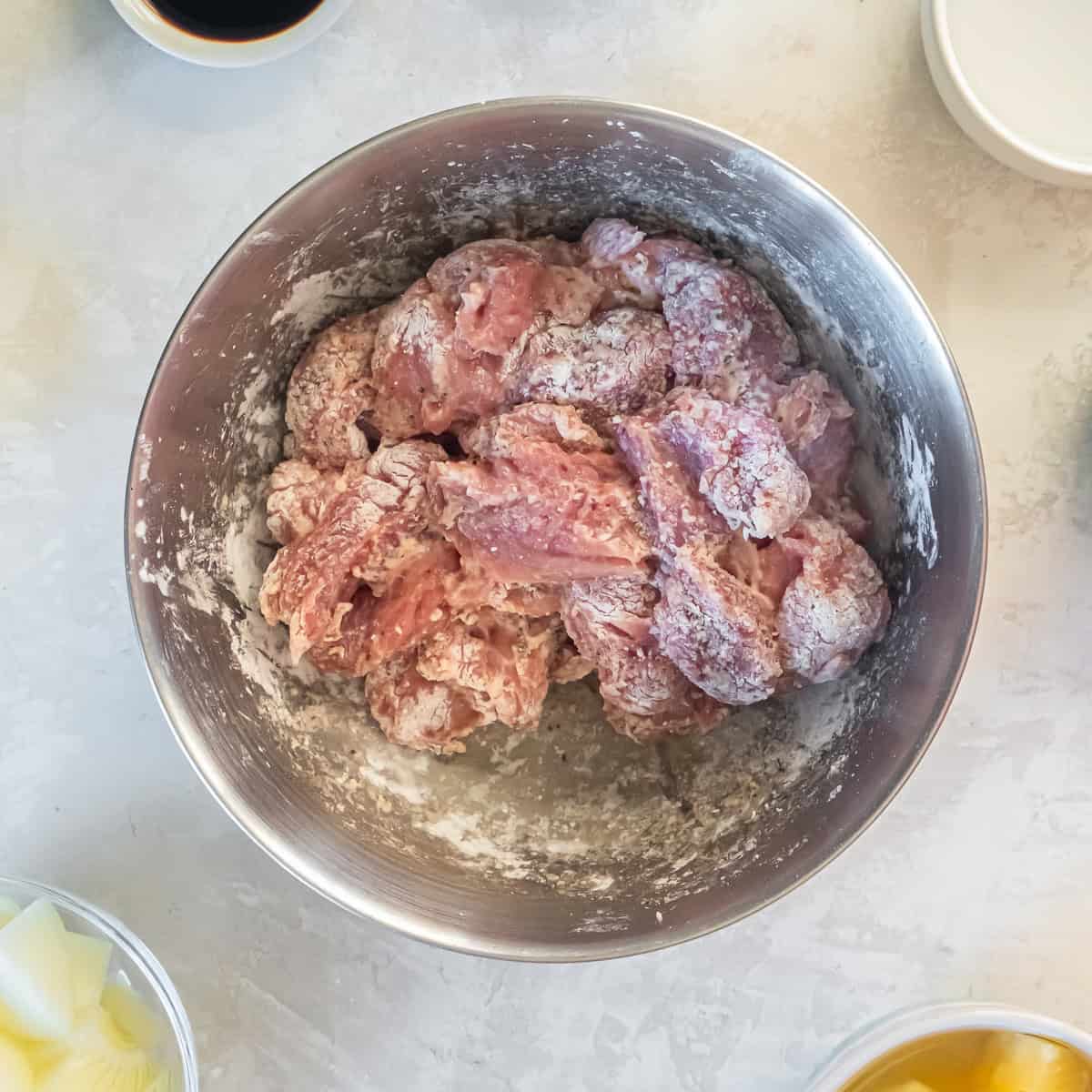
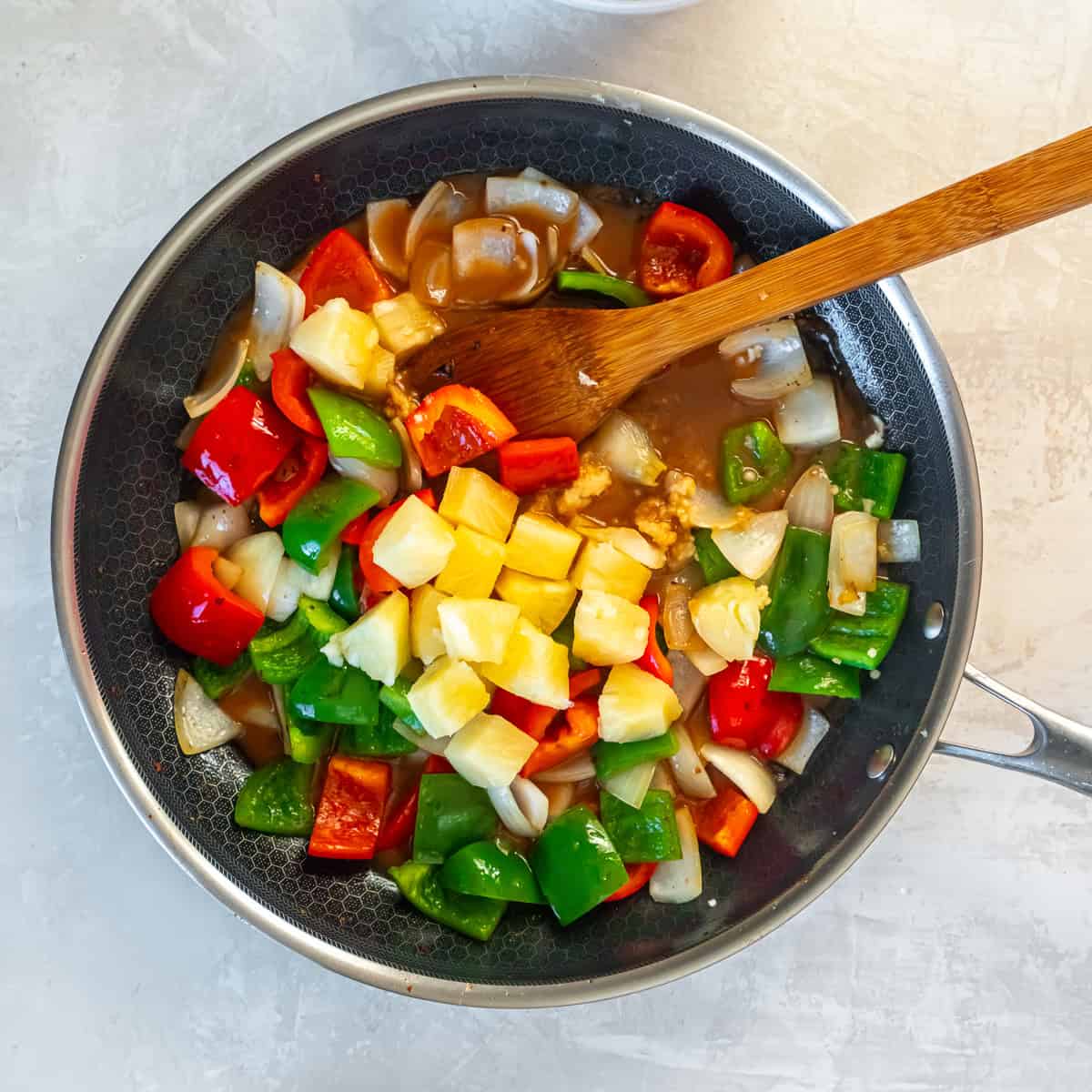
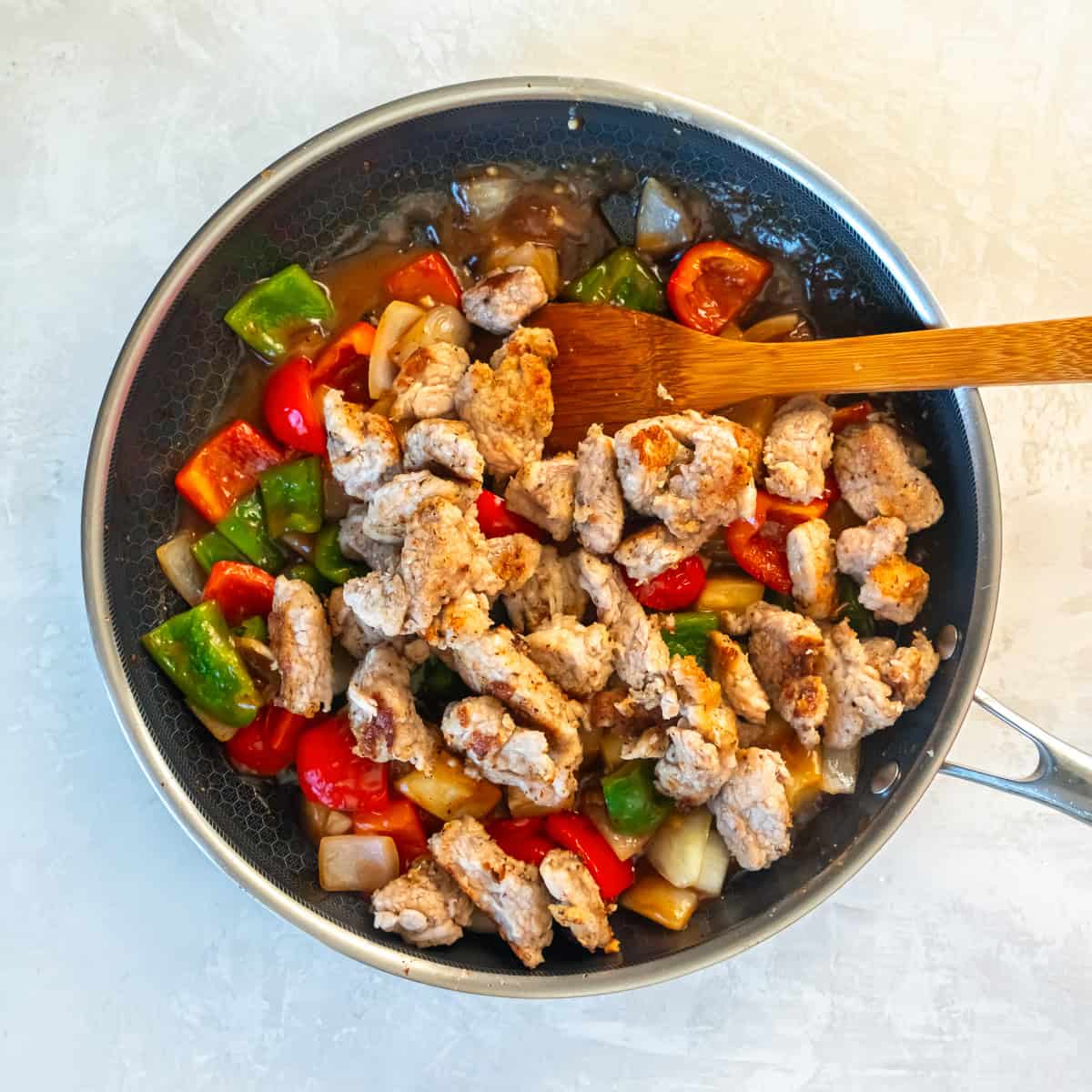
- Toss the pork with salt, pepper, and cornstarch until evenly coated.
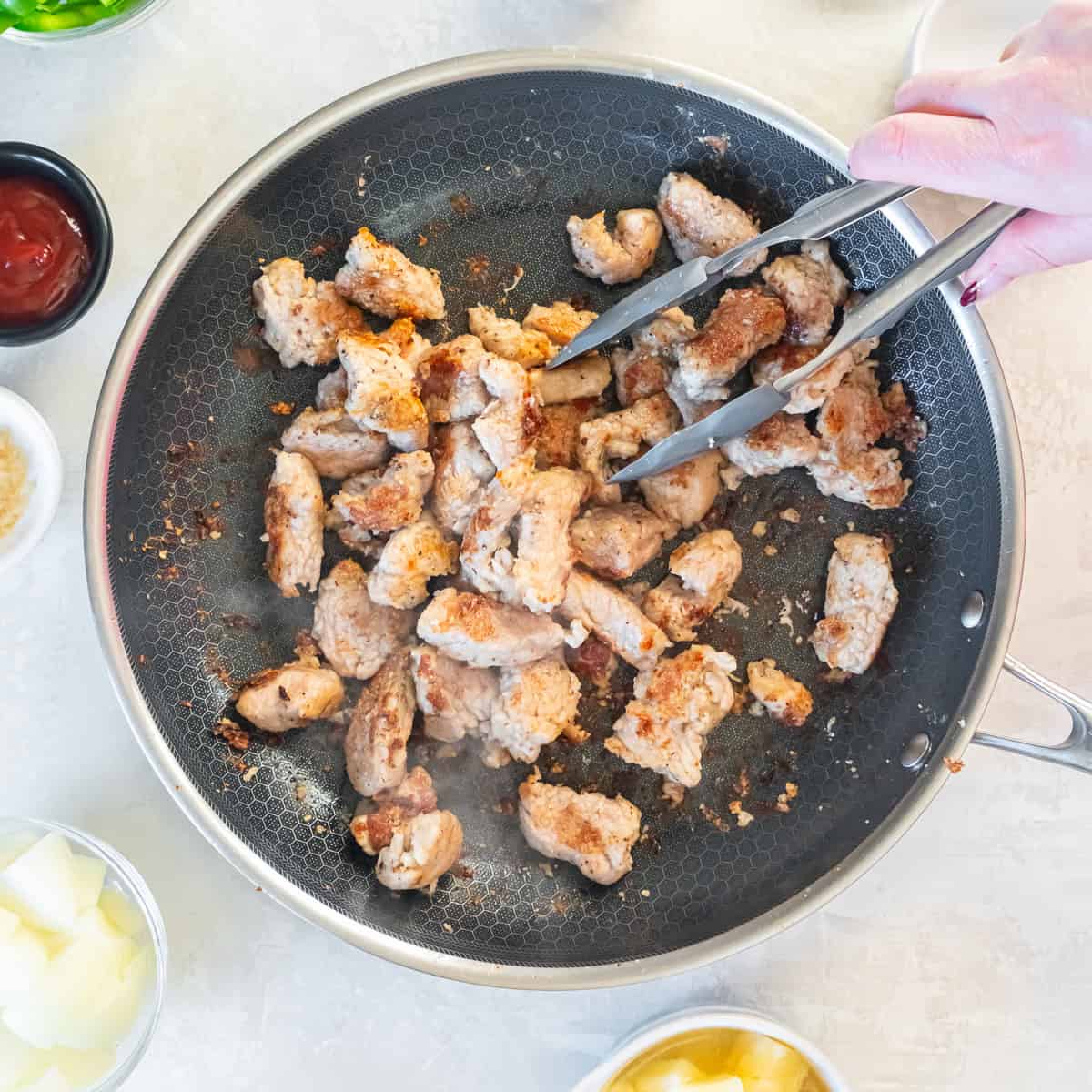
- Brown the pork in a large skillet in a single layer until lightly golden brown, then transfer to a plate.
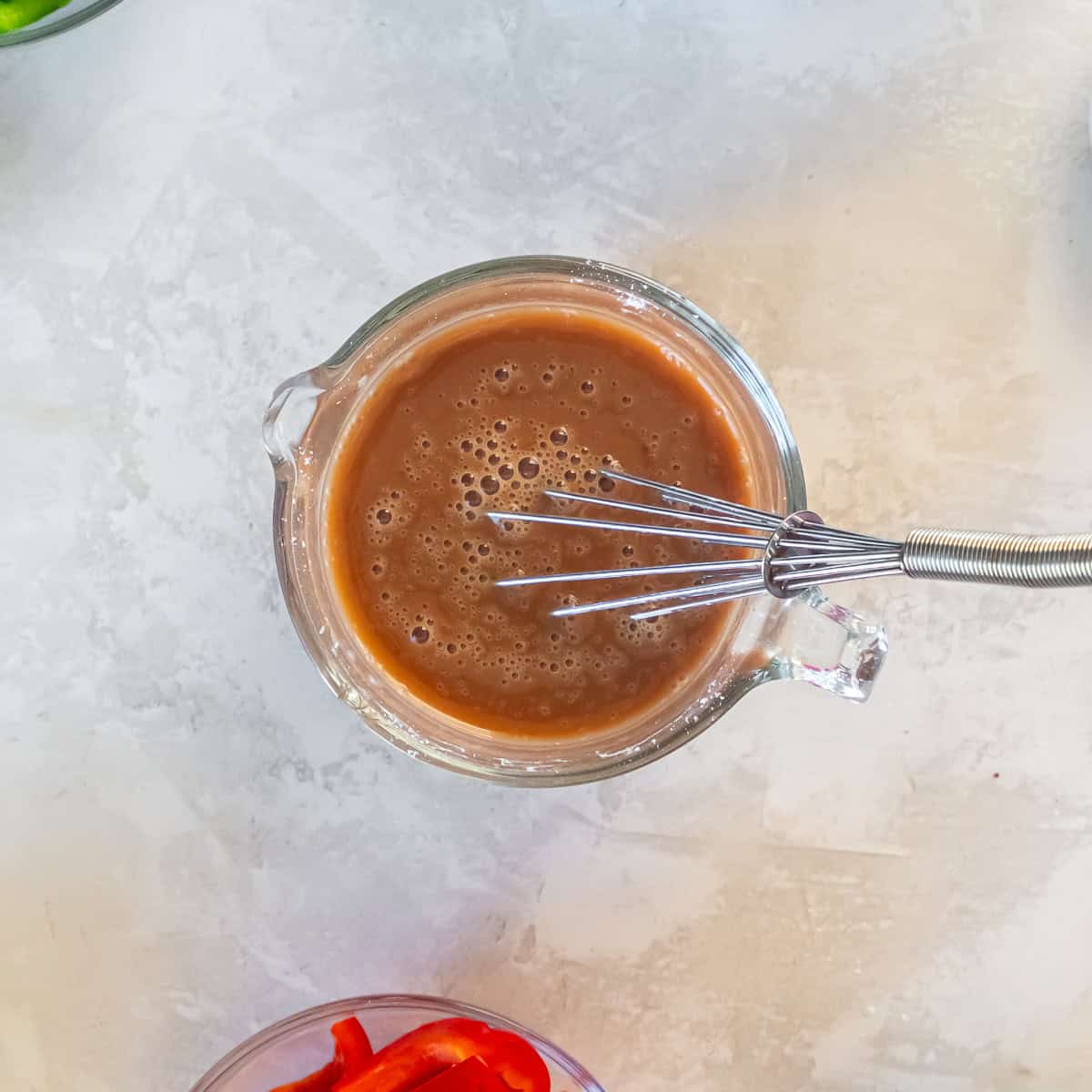
- Whisk together the sweet and sour sauce ingredients.
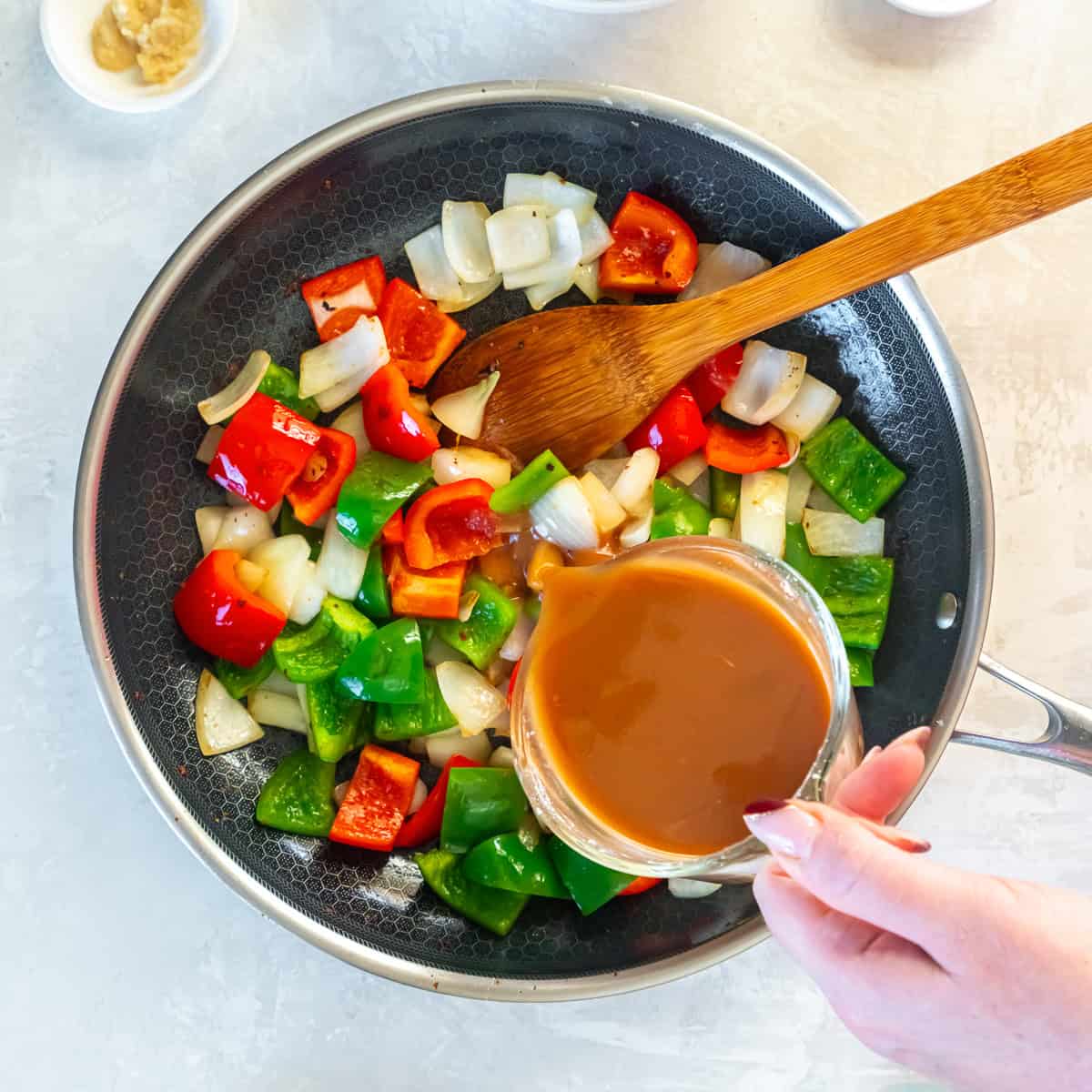
- Cook the onion and bell peppers in the same skillet until crisp-tender, then pour the sauce into the skillet and simmer until thickened.
- Add the pineapple.
- Return the pork to the skillet and immer briefly until everything is coated and warmed through. Garnish with green onion and serve.
Tips and Variations
Chicken option: Boneless, skinless chicken thighs can be substituted for the pork. Cut them into similar-sized chunks and cook just until done.
Add heat: Stir in a pinch of red pepper flakes or a small amount of chili paste if you like a little heat.
Vegetable swaps: Broccoli florets, snap peas, or sliced carrots work well in place of some of the bell peppers. Add firmer vegetables first so they have time to soften.
Control the sweetness: Start with the lower amount of honey, then taste and adjust the sauce before adding the pork back to the skillet.
Gluten-free option: Use a gluten-free soy sauce or tamari to keep the dish gluten free.
Storage
Store leftovers in an airtight container in the refrigerator for up to 3 days. Reheat gently in a skillet or microwave until warmed through. The sauce may thicken slightly after chilling but will loosen as it reheats.
For more healthy cooking inspiration, join us on Facebook, Instagram, and Pinterest and join our FREE email list for the latest recipes straight to your inbox!
Sweet and Sour Pork Tenderloin
Ingredients
- 1 ¼ to 1½ pounds pork tenderloin, cut into ¾ -inch chunks
- Kosher salt and pepper, to taste
- 2 tablespoons cornstarch
- 3 tablespoons avocado oil or olive oil, divided
- 1 red bell pepper, chopped 1-inch pieces
- 1 green bell pepper, chopped 1-inch pieces
- 1 medium yellow onion, chopped 1-inch pieces
- 2 teaspoons grated ginger or ginger paste
- 1 clove garlic, minced
- 8 ounce can pineapple chunks, drained, juice reserved
Light Sweet and Sour Sauce
- Pineapple juice, reserved from the can, about ¼ cup
- ¼ cup Low sodium broth or water, or as needed
- 3 tablespoons rice vinegar or apple cider vinegar
- 2 tablespoons low-sodium soy sauce, or tamari for gluten-free
- 3 tablespoons ketchup
- 1½ to 2 tablespoons honey
- 1 tablespoon cornstarch
Instructions
Prep and brown the pork
- Place the pieces of pork in a medium bowl. Season to taste with salt and pepper and toss with 2 tablespoons cornstarch until the pork is well coated.
- Heat 2 tablespoons of oil in a large nonstick skillet. Sear the pork for about 3 minutes per side until lightly browned and cooked through. Transfer to a plate.
Make the sauce
- Strain the pineapple juice from the can into a small bowl. Add the vinegar, soy sauce, ketchup, honey, and cornstarch and whisk until well combined. Set aside.
Cook the veggies
- Add the remaining 1 tablespoon oil to the same skillet and return it to the heat. Cook the onion and bell peppers for 5 to 6 minutes until crisp-tender. Add the garlic and ginger and cook for an additional 30 seconds.
- Add sauce and pineapple
- Whisk the sauce to be sure the cornstarch is well incorporated and pour it into the skillet. Add the pineapple chunks and bring the mixture to a simmer. Cook for 1 to 2 minutes until the sauce is thickened and glossy.
Finish and Serve
- Add the cooked pork and simmer for 2 to 3 minutes, until warmed through.
- Served spooned over brown rice or cauliflower rice.
Nutrition
Nutrition information is automatically calculated using generic ingredients, and is an estimate not a guarantee. For more accurate results, please refer to the labels on your ingredients at home. All information provided regarding nutrition on this website is intended to be used for informational purposes only. Content related to nutrition is not medical advice nor is it intended to replace medical advice. The website is not intended to diagnose, prescribe, or treat any disease, condition, illness, or injury. Before beginning any diet program, modifying your diet, or making changes to the diet of a child in your care, including following the nutrition information available on the website, you should seek advice from a licensed professional.
More Pork Dinners
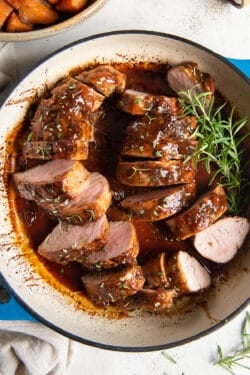
Apricot Glazed Pork Tenderloin
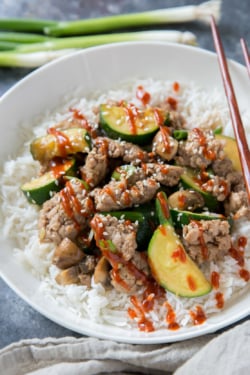
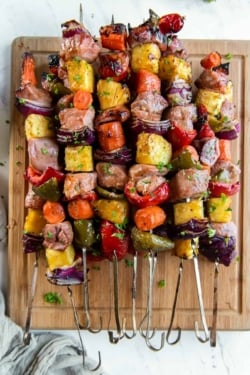
Sweet and Sour Pork Kabobs












I’m a long-time fan of Asian-style cuisine and with a rainy day here in East Tennessee I decided to make your sweet and sour dish. I opted to substitute boneless/skinless chicken thighs for the pork. Yum! The 3/4″ cubes of chicken were melt-in-your-mouth tender! I followed your recipe exactly. Baked medium grain brown rice was my base layer. I think I’d have preferred white rice with this dish. I used apple cider vinegar and 1 tsp of honey; it was perfectly sweetened. Midway thru the first serving I added some sriracha sauce and that was all it needed to be nearly perfect.
Thank you for the recipe.
Happy to hear it worked so well with chicken thighs. Thanks, Al!