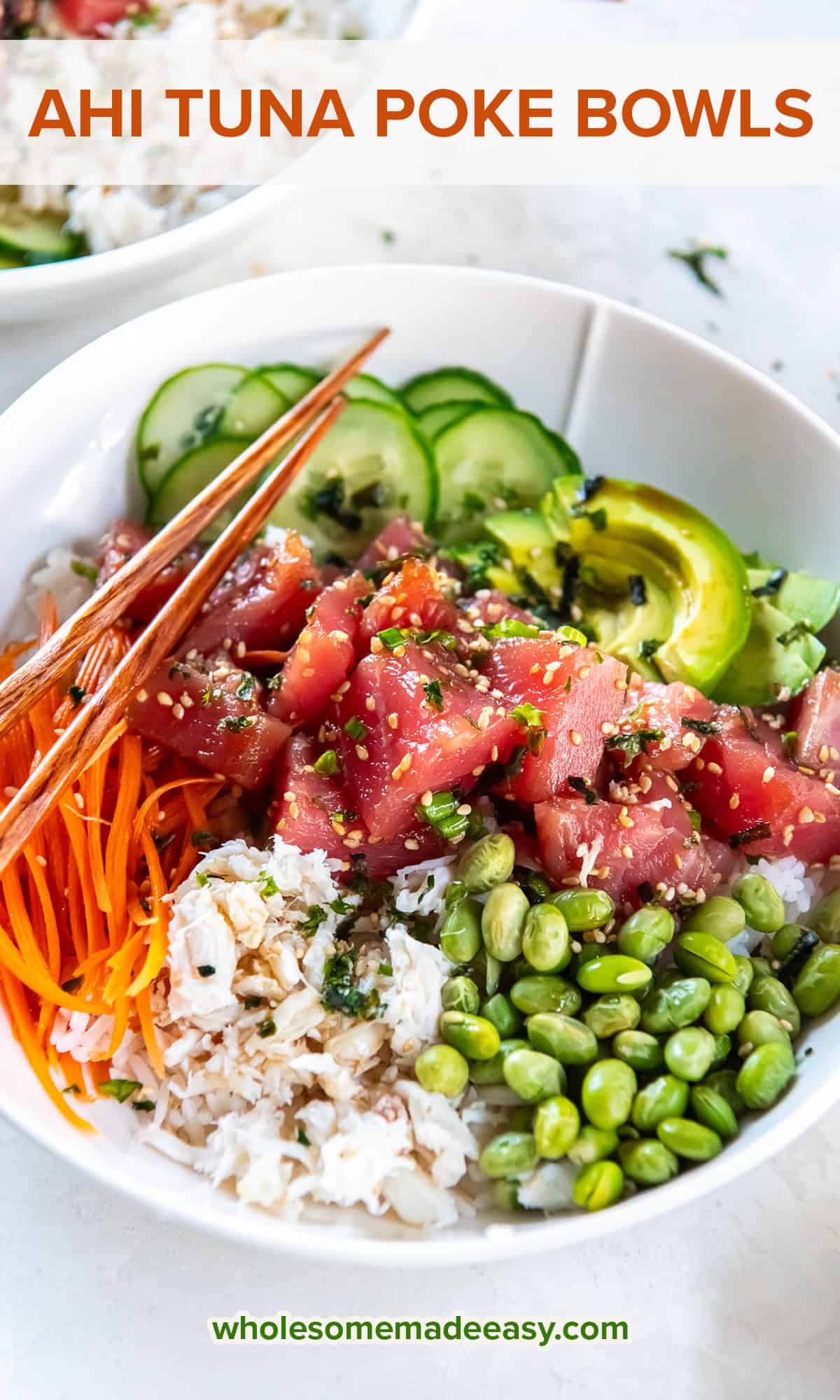
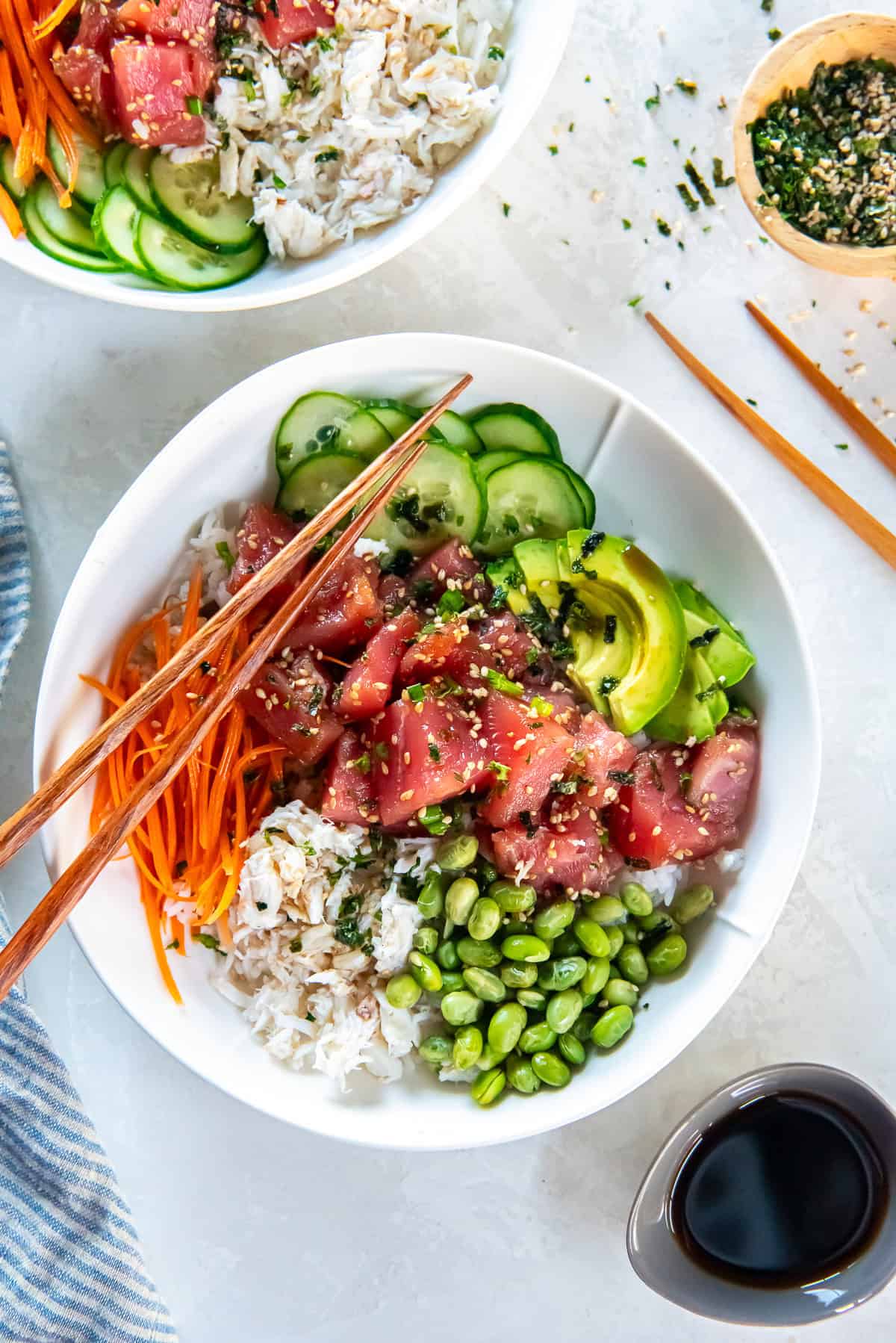
These Ahi Tuna Poke Bowls are fresh, colorful, and layered with marinated tuna, crisp vegetables, and rice. It’s an easy way to recreate a poke shop favorite right in your own kitchen.
If you’ve never made poke at home, it’s surprisingly simple. Poke (pronounced POH-kay) is a Hawaiian dish traditionally made with cubes of raw fish that are lightly seasoned and served over rice with fresh toppings.
This recipe comes courtesy of my daughter-in-law Emma. My kiddos all love poke, and I have to be honest, I didn’t realize how easy it is to make your own poke bowl at home until she shared her recipe with me!
If you enjoy bowl-style meals like this one, be sure to try my Teriyaki Chicken and Rice Bowls.
Table of contents
Ahi Tuna Poke Bowl Ingredients
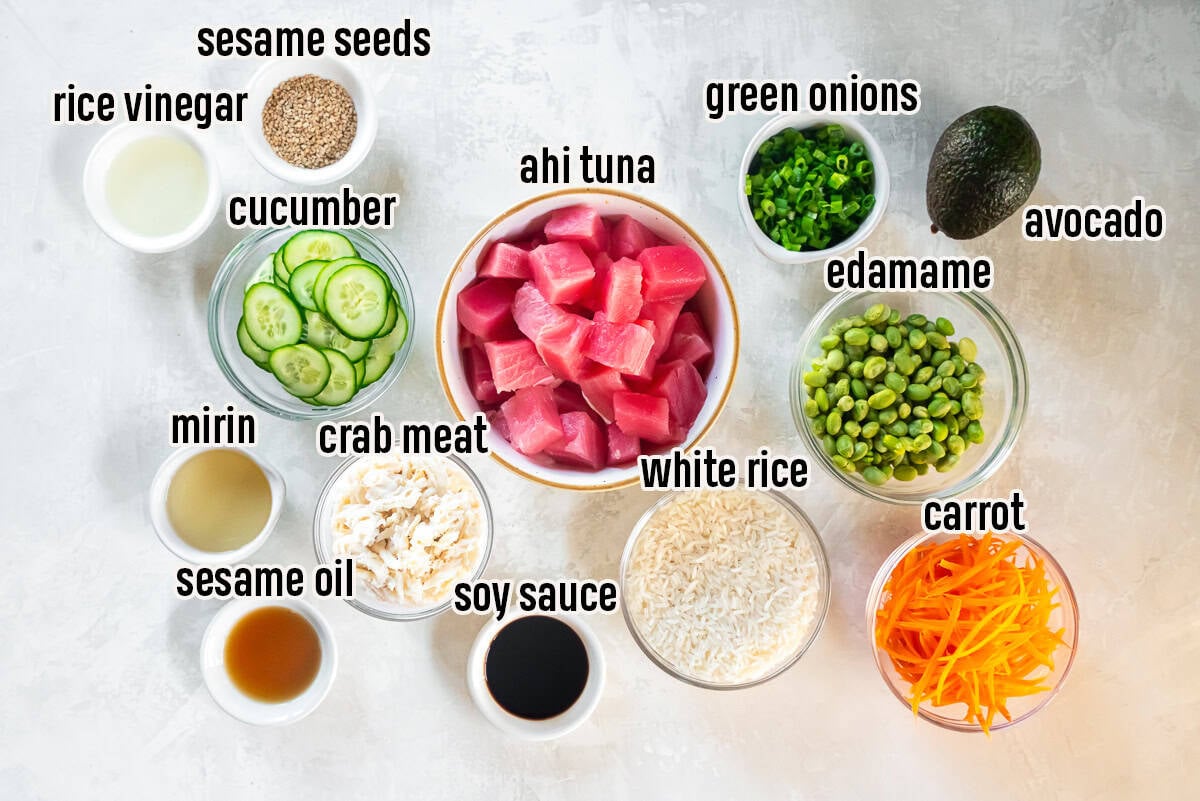
- Ahi tuna: Look for sushi-grade ahi tuna (yellowfin) that is safe for raw consumption and keep it refrigerated until ready to use. Many grocery stores with a seafood counter carry sushi grade fish, and it’s also commonly available at Asian markets or seafood specialty stores. It should be very fresh and firm since it will be served raw.
- White rice: Jasmine or other long-grain white rice works well as the base for these bowls. Short-grain rice is another good option because its slightly sticky texture holds together nicely.
- Soy sauce, mirin, and sesame oil: This simple combination lightly marinates the tuna and adds savory, slightly sweet flavor with a hint of nutty sesame. Mirin is a lightly sweet Japanese rice wine that adds subtle sweetness and depth to the marinade. All of these ingredients are usually available in the Asian foods aisle of most grocery stores.
- Seasoned rice vinegar: Stirred into the warm rice to add brightness and the lightly tangy flavor typical of poke bowls.
- Green onions and sesame seeds: These add fresh flavor and a little texture to the marinated tuna.
- Crab meat: Lump crab meat from the seafood counter is a great option, but canned white crab meat is a more budget-friendly choice that works very well.
- Cucumber, shredded carrot, avocado, and edamame: These fresh toppings add color, crunch, and creamy texture to the bowls. To save time, you can use bagged pre-shredded carrots from the produce section. Slice the cucumber thinly and wait to cut the avocado until just before serving so it stays fresh and bright. If using frozen shelled edamame, cook it according to the package directions and let it cool before adding it to the bowls.
- Optional toppings: Furikake is a Japanese seasoning blend made with sesame seeds and seaweed that adds savory, nutty flavor and a little crunch. Ponzu sauce is a light soy-based sauce with citrus that adds a bright, tangy finish. Kewpie mayo is a Japanese-style mayonnaise with a richer, slightly tangy flavor that’s often drizzled over poke bowls.
How to Make Ahi Tuna Poke Bowls
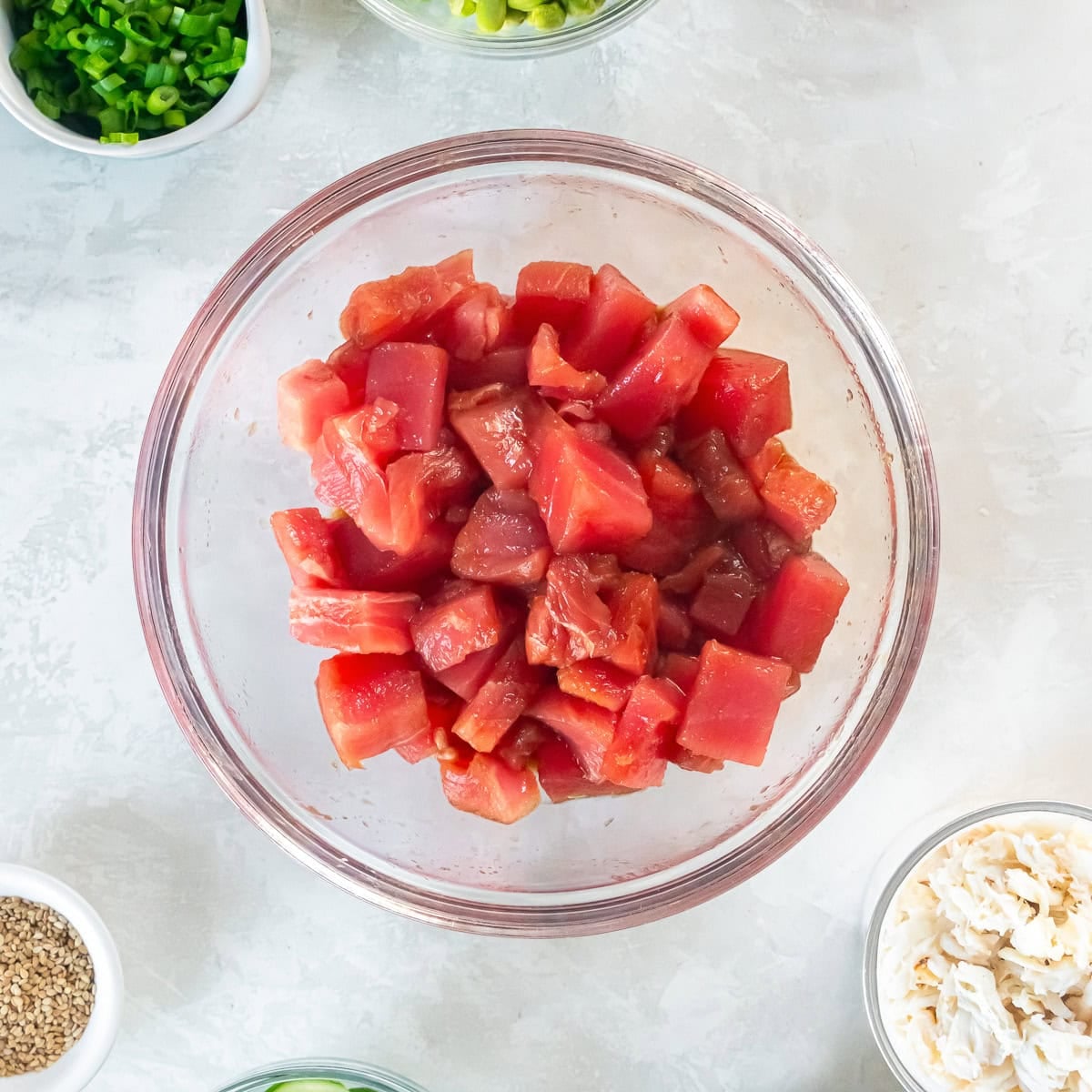
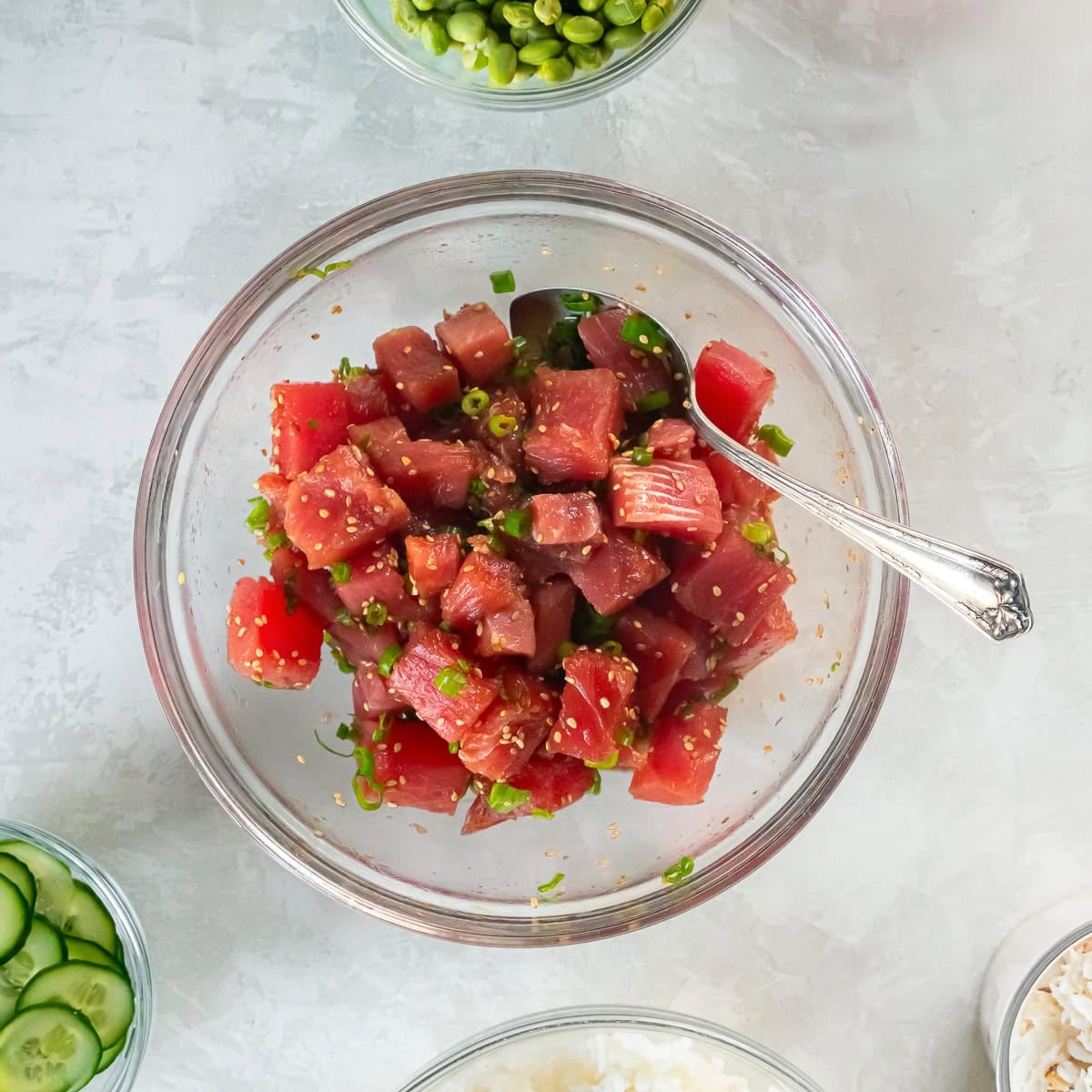
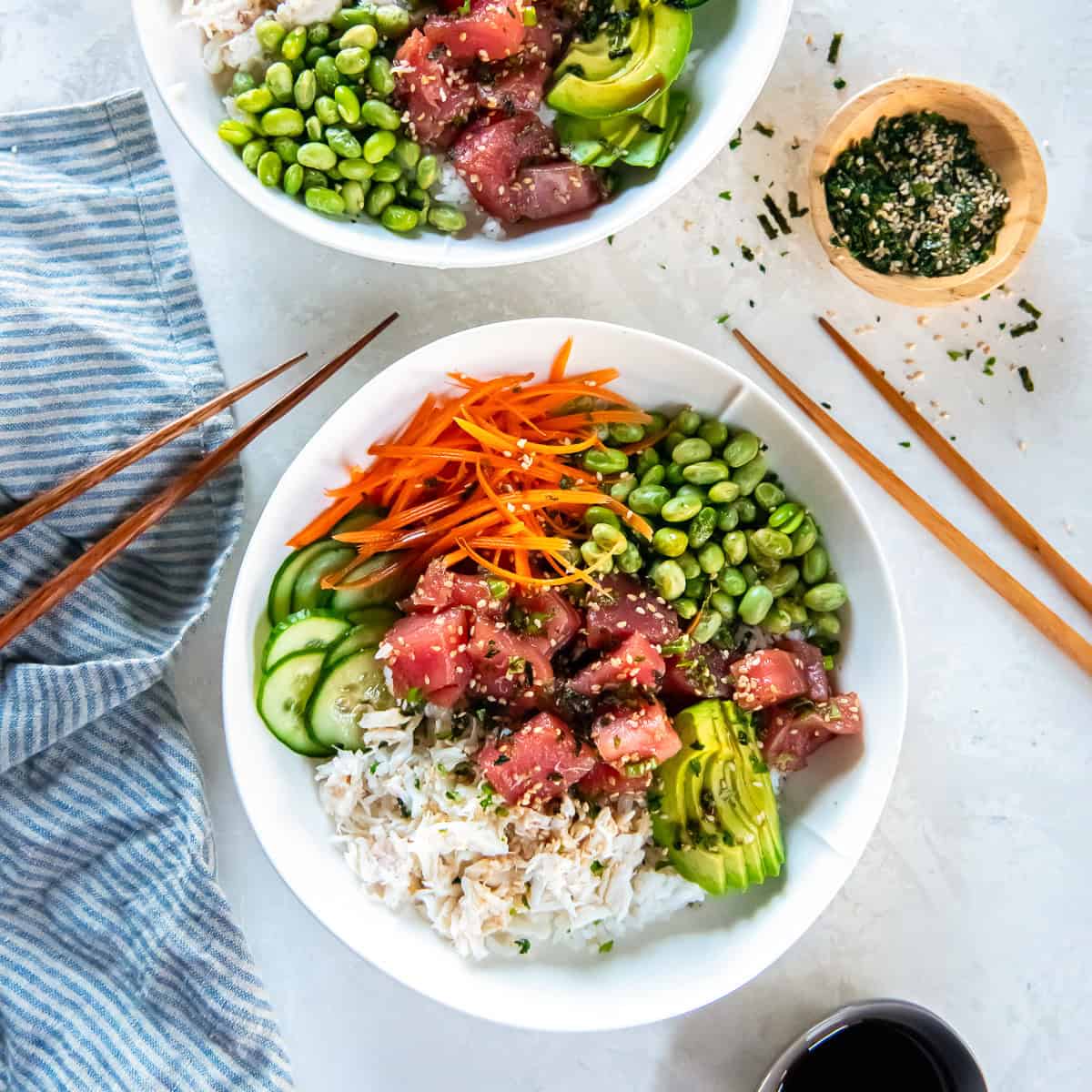
- Combine the cubed ahi tuna with the soy sauce, mirin, and sesame oil in a bowl. Cover and refrigerate for about 20 minutes to marinate.
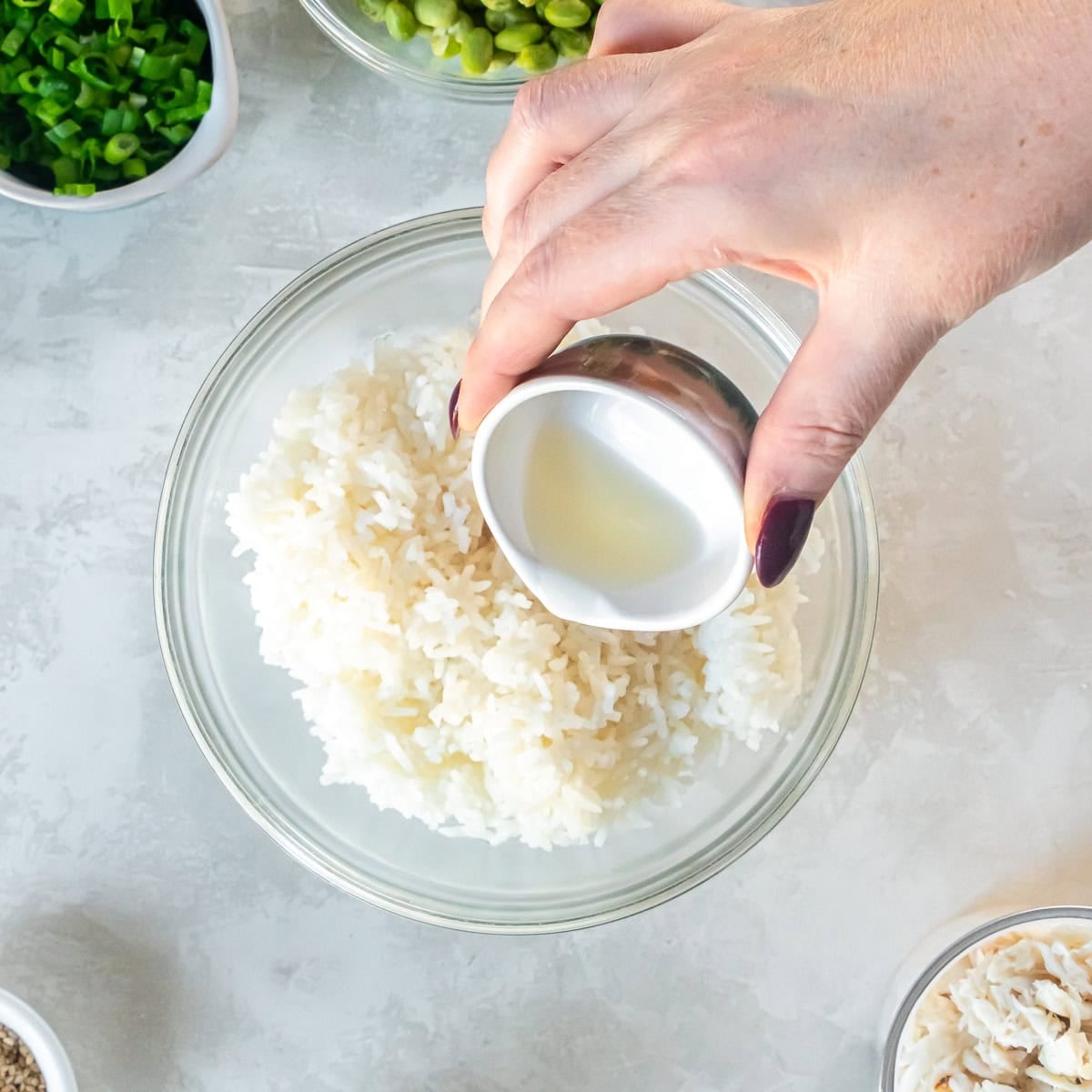
- Meanwhile, cook the rice according to the package directions. While it’s still warm, stir in the seasoned rice vinegar until evenly combined.
- Remove the tuna from the refrigerator and gently toss with the sliced green onions and sesame seeds.
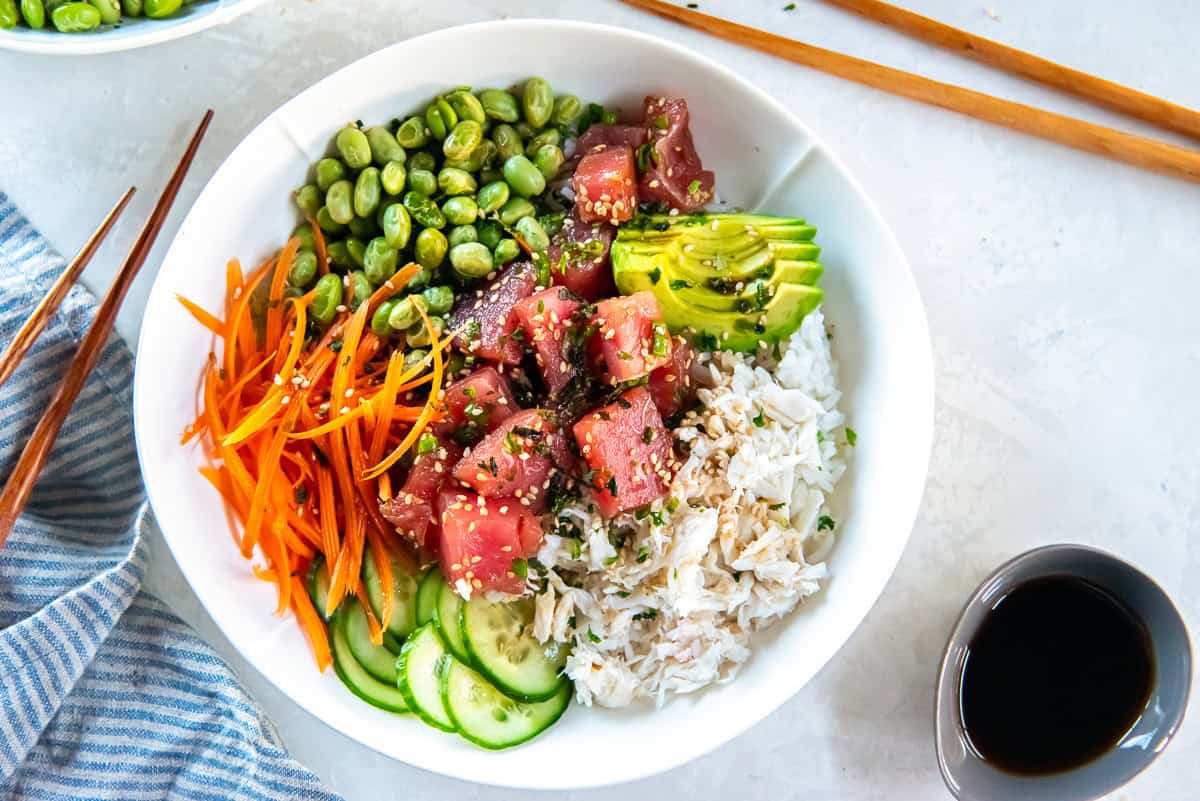
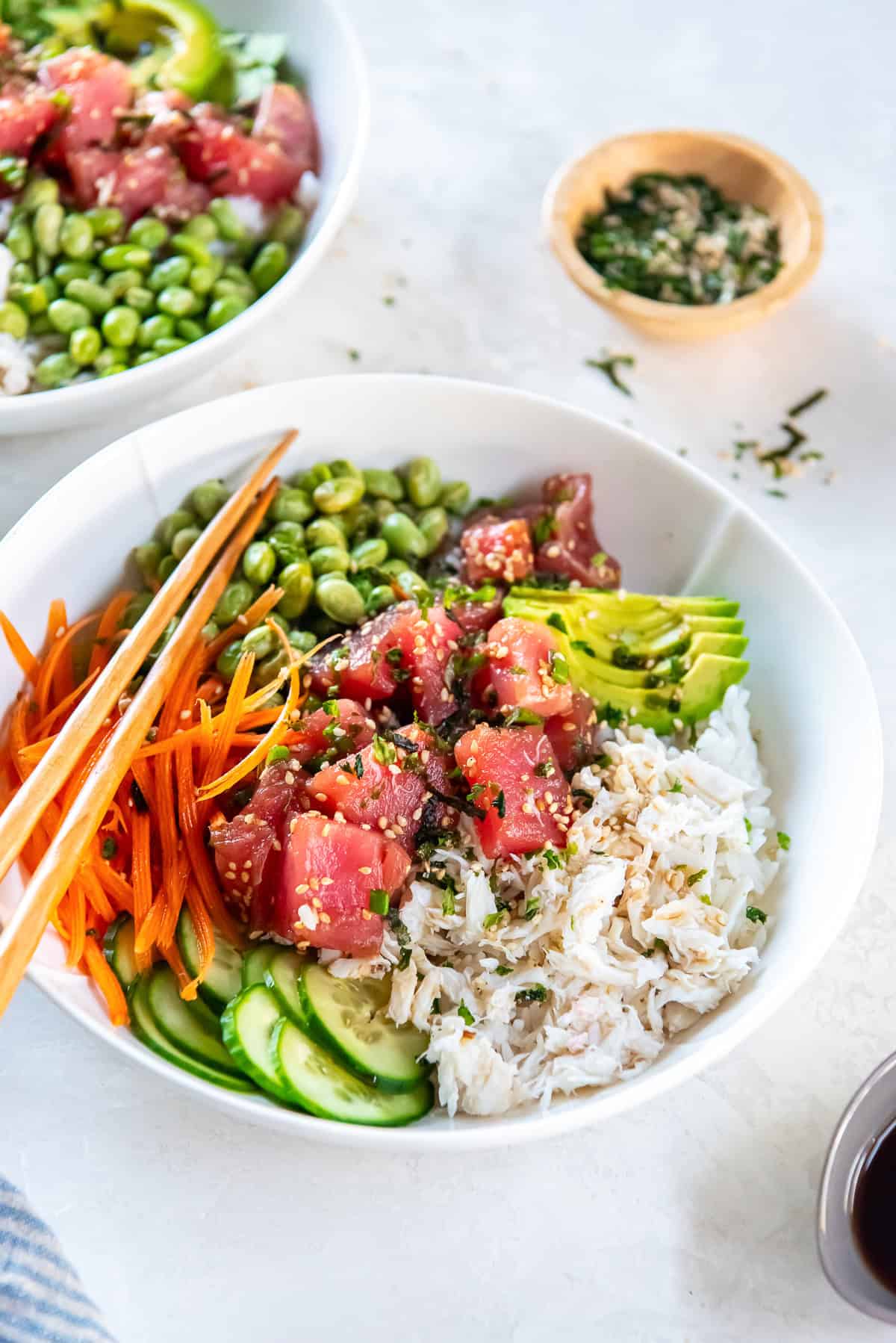
- Divide the rice among bowls. Add the marinated tuna and crab meat, then arrange the cucumber, carrot, avocado, and edamame in sections around the bowl. Garnish with furikake or other optional toppings you’d like.
Make-Ahead Tips
Cook the rice ahead: The rice can be cooked earlier in the day. Store it covered in the refrigerator and reheat it gently or let it come to room temperature before assembling the bowls. If it seems dry, sprinkle it with a little water before reheating.
Prep the toppings: The carrot, cucumber, and edamame can all be prepared several hours in advance and stored in the refrigerator.
Marinate the tuna shortly before serving: For the best texture and flavor, marinate the tuna about 20 minutes before assembling the bowls.
Assemble just before serving: Poke bowls are best when assembled right before eating so the ingredients stay fresh and colorful.
Poke Bowl Variations
- Spicy tuna poke bowls: For a spicy version, mix 1 to 2 tablespoons mayonnaise (or Kewpie mayo) with 1 to 2 teaspoons sriracha and gently toss it with the marinated tuna before assembling the bowls.
- Swap the fish: Sushi-grade salmon works beautifully in place of tuna.
- Use cooked seafood: If you prefer not to use raw fish, try baked salmon cubes or cooked shrimp instead.
- Lighten it up: Serve the poke mixture over mixed greens instead of rice for a lighter bowl.
- Add extra crunch: Shredded cabbage, sliced radishes, or crispy wonton strips are great additions.
For more healthy cooking inspiration, join us on Facebook, Instagram, and Pinterest and join our FREE email list for the latest recipes straight to your inbox!
Ahi Tuna Poke Bowl Recipe
Ingredients
- 1 cup white rice, rinsed
- 12 ounces sushi grade ahi tuna, cut into ½-inch cubes
- 1 tablespoon low sodium soy sauce, use tamari or gluten-free soy sauce if needed
- 1 tablespoon mirin
- ½ tablespoon toasted sesame oil
- 4 to 5 green onions, thinly sliced
- 1 tablespoon sesame seeds
- 2 Tablespoons seasoned rice vinegar
- 8 ounce can white crab meat, drained
- ½ cup of shredded carrot
- ¼ to ½ of a cucumber, thinly sliced
- 1 avocado, sliced
- ½ cup cooked shelled edamame, cooked according to package directions
Optional Toppings (see notes below)
- Furikake
- Ponzu sauce
- Kewpie mayo
Instructions
- Cook the rice according to the package directions using a rice cooker or stovetop method.
- In a medium bowl, combine the soy sauce, mirin, and toasted sesame oil. Add the cubed tuna and toss gently to coat. Cover and refrigerate for 20 minutes to marinate.
- Remove the tuna from the refrigerator and gently toss with the green onion and sesame seeds.
- When the rice is cooked, stir in the seasoned rice vinegar and mix until combined.
- To assemble the bowls, divide the rice among four bowls. Arrange the tuna and crab meat over the rice and add the carrot, cucumber, avocado, and edamame in sections around the bowl. Garnish with any of the optional toppings, if desired.
Notes
Nutrition
Nutrition information is automatically calculated using generic ingredients, and is an estimate not a guarantee. For more accurate results, please refer to the labels on your ingredients at home. All information provided regarding nutrition on this website is intended to be used for informational purposes only. Content related to nutrition is not medical advice nor is it intended to replace medical advice. The website is not intended to diagnose, prescribe, or treat any disease, condition, illness, or injury. Before beginning any diet program, modifying your diet, or making changes to the diet of a child in your care, including following the nutrition information available on the website, you should seek advice from a licensed professional.
More Ideas
Broccoli Mushroom Stir Fry
Teriyaki Chicken and Rice Bowls
Easy Ground Beef and Broccoli